Dunhinda Falls, Sri Lanka | Badulla Waterfall Guide
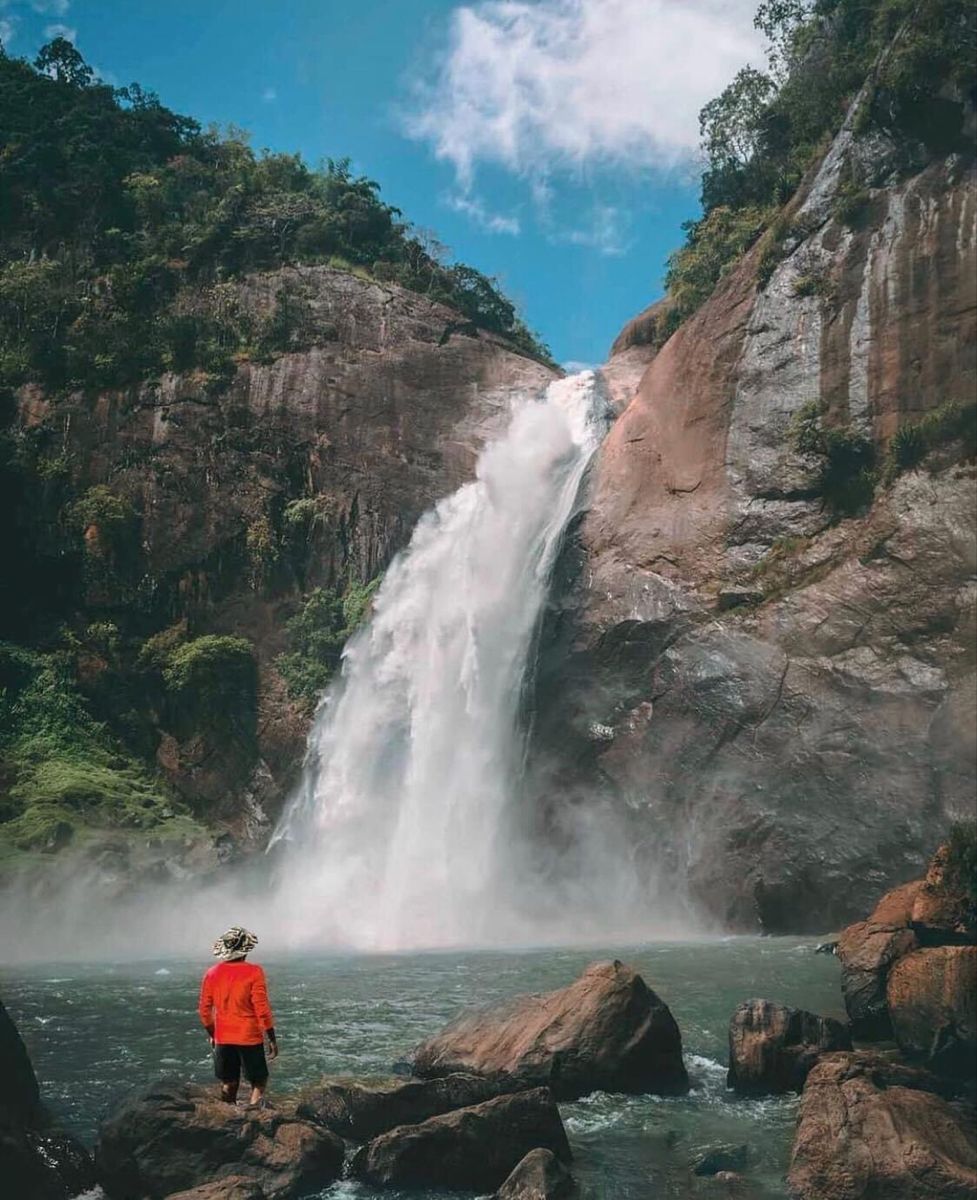
Hidden among the lush hills near Badulla, Dunhinda Falls is one of Sri Lanka’s most beautiful and atmospheric waterfalls. The 64-metre cascade is formed by the Badulu Oya and is famous for the fine mist that rises around its base. The name “Dunhinda” comes from the Sinhala word associated with smoke or mist, describing the waterfall’s distinctive smoky appearance.
Located only a few kilometres from Badulla town, Dunhinda is an excellent destination for travellers who enjoy nature, photography and short walks through Sri Lanka’s hill country. Reaching the waterfall involves a scenic forest trail, making the journey itself part of the experience.
What Makes Dunhinda Falls Special?
Dunhinda is more than a waterfall viewed from the roadside. The walk through the surrounding greenery gradually takes you away from the road and into a peaceful natural environment.
The powerful 64-metre cascade creates a cloud of fine spray around the base, giving the falls their characteristic misty appearance. During periods of heavy rainfall, the volume of water increases dramatically and the waterfall becomes particularly impressive.
For photographers, the combination of falling water, forest, mist and surrounding hills makes Dunhinda one of the most rewarding waterfall locations around Badulla.
The Walk to Dunhinda Falls
Dunhinda Falls is reached by walking approximately 1 kilometre from the entrance along a forest trail. The path is generally well used, but it can become muddy and slippery, particularly after rain.
Along the way, you can enjoy the surrounding vegetation and look out for birds, butterflies and monkeys. You can also see the smaller Kuda Dunhinda, or Little Dunhinda, along the route.
The walk is not a difficult hike for most reasonably fit travellers, but comfortable shoes with good grip are strongly recommended.
Kuda Dunhinda – Little Dunhinda
One of the enjoyable parts of the walk is the opportunity to see Kuda Dunhinda, a smaller waterfall associated with the main falls.
Although it is not as spectacular as the main 64-metre cascade, Kuda Dunhinda adds another interesting feature to the walk and gives visitors something to discover before reaching the main viewpoint.
Best Time to Visit Dunhinda Falls
Dunhinda Falls can be visited throughout the year, but the waterfall becomes particularly powerful during and after the wetter periods.
Sri Lanka Tourism highlights November to March as a particularly impressive period because of the larger volume of water flowing over the falls.
The wetter conditions can make the trail muddy and slippery, however, so visitors should balance the spectacular water flow with the additional care required on the walking trail.
If you prefer easier walking conditions, visiting during a drier period can be more comfortable, although the waterfall may have less water.
Early morning is a good time to visit because the weather is generally cooler and the trail is often quieter. It can also provide excellent conditions for photography.
How to Get to Dunhinda Falls
Dunhinda Falls is located approximately 5 kilometres from Badulla town in Uva Province. The entrance is reached from the Badulla–Mahiyanganaya Road, making it relatively easy to combine with a visit to Badulla.
From Badulla, you can take a tuk-tuk, taxi or local bus towards the Dunhinda entrance. From there, the final part of the journey is completed on foot.
From Ella, Dunhinda can be visited as a day trip or as part of a wider journey through the Uva region. Travellers arriving in Badulla by train will need onward road transport to reach the waterfall entrance.
If you are driving, check the route to the entrance rather than simply navigating to the waterfall itself, as the final section requires walking.
How Long Do You Need at Dunhinda?
Allow approximately 1.5 to 2.5 hours for a relaxed visit, including the walk to the waterfall, time at the viewpoint and the return journey.
Photography enthusiasts may want to allow longer, particularly if the weather and water flow are favourable.
The actual walking distance is relatively short, but taking your time to enjoy the forest and Kuda Dunhinda makes the experience much more rewarding.
Wildlife Along the Trail
The walk to Dunhinda passes through a green natural environment where visitors may encounter a variety of wildlife.
Keep an eye out for:
- Colourful birds
- Butterflies
- Monkeys
- Other small forest wildlife
- Native plants and ferns
Sri Lanka Tourism specifically highlights birds, butterflies, monkeys and deer as wildlife that visitors may encounter in the area.
Remember not to feed wild animals and keep food securely stored when monkeys are nearby.
Can You Swim at Dunhinda Falls?
Swimming near the base of Dunhinda Falls is not recommended.
The rocks around the waterfall can be extremely slippery, and the water at the base is deep with potentially dangerous currents. Sri Lanka Tourism specifically warns visitors not to approach the waterfall closely or bathe because of the depth and slippery rocks.
The safest way to enjoy Dunhinda is from the designated viewing area and stable sections of the trail.
Dunhinda Falls for Families
Dunhinda can be a good family destination for children who are comfortable with a short forest walk.
However, the trail is not suitable for pushchairs and can become slippery after rain. Parents should keep younger children close, particularly around uneven sections and near the waterfall viewing area.
Good walking shoes are much more suitable than sandals or flip-flops.
Dunhinda Falls for Photography
Dunhinda is an excellent destination for waterfall photography.
The wide cascade, surrounding greenery and fine mist create plenty of opportunities for landscape photographs. During wetter periods, the increased water flow makes the waterfall particularly dramatic.
Morning visits can provide softer light and fewer visitors. A waterproof cover or protection for your camera or phone is useful because the spray can reach the viewing area.
Tips for Visiting Dunhinda Falls
- Wear comfortable shoes with good grip.
- Be especially careful after rain when the trail becomes muddy and slippery.
- Carry drinking water.
- Bring insect repellent if you plan to spend longer on the trail.
- Keep food away from monkeys and never feed wildlife.
- Allow enough time for the return walk.
- Do not swim or climb onto slippery rocks near the waterfall.
- Take care around the edge of the viewing areas.
- Keep the trail clean and take your rubbish with you.
- Visit early if you prefer cooler conditions and fewer visitors.
Is Dunhinda Falls Worth Visiting?
Yes. Dunhinda Falls is one of the best natural attractions to visit around Badulla and is particularly worthwhile for travellers who enjoy waterfalls and short nature walks.
The combination of the forest trail, Kuda Dunhinda, the powerful 64-metre cascade and the mist surrounding the waterfall makes Dunhinda much more than a quick roadside photo stop.
It is also easy to combine with other attractions around Badulla and the wider Uva region, making it a good addition to a Sri Lanka Hill Country itinerary.
Frequently Asked Questions
Where is Dunhinda Falls?
Dunhinda Falls is located about 5 kilometres from Badulla in Sri Lanka’s Uva Province. The waterfall is formed by the Badulu Oya.
How high is Dunhinda Falls?
Dunhinda Falls is approximately 64 metres high.
How long is the walk to Dunhinda Falls?
The walk from the entrance to the waterfall is approximately 1 kilometre. The trail passes through natural vegetation and includes views of Kuda Dunhinda.
What is the best time to visit Dunhinda Falls?
Dunhinda can be visited year-round, but the falls are particularly impressive from November to March when water flow is generally greater.
Can you swim at Dunhinda Falls?
Swimming is not recommended. The water around the base is deep and the rocks are slippery, while currents can be dangerous.
Is Dunhinda Falls suitable for children?
Yes, for children who are comfortable with a short uneven forest walk. Younger children should be supervised carefully, particularly on slippery sections and around the waterfall.
Can you visit Dunhinda Falls from Ella?
Yes. Dunhinda is close enough to Badulla to be included in an Ella and Badulla itinerary. It can work particularly well as part of a wider exploration of the Uva highlands.
What else can you see near Dunhinda Falls?
The waterfall can be combined with attractions around Badulla and the Uva region, including Kuda Dunhinda, Muthiyangana Raja Maha Viharaya, Bogoda Wooden Bridge and attractions around Ella.
Google Maps: https://maps.google.com/?q=Dunhinda+Waterfall+Badulla,Sri+Lanka