Temple of the Tooth Kandy, Sri Lanka | Visitor Guide
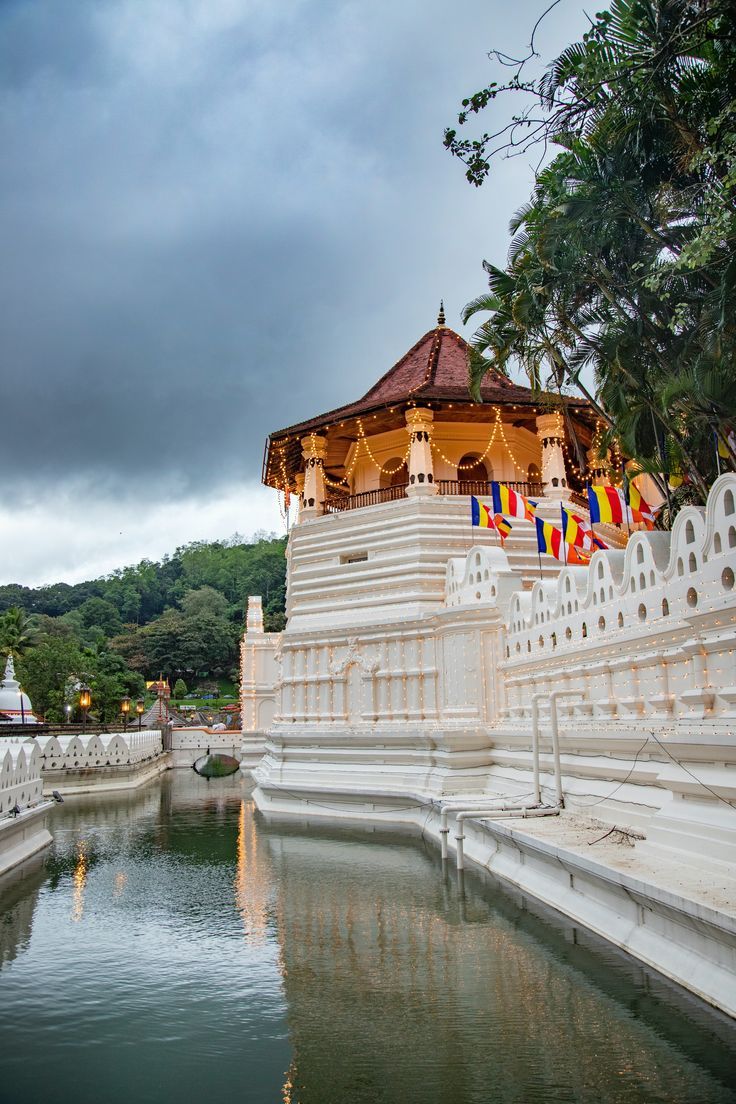
The Temple of the Sacred Tooth Relic, commonly known as the Temple of the Tooth or Sri Dalada Maligawa, is one of the most important Buddhist sites in Sri Lanka and one of the country’s most significant cultural attractions.
Located beside Kandy Lake in the heart of the historic city of Kandy, the temple houses what Buddhists venerate as the sacred Tooth Relic of the Buddha. The temple forms part of the Sacred City of Kandy, which has been a UNESCO World Heritage Site since 1988.
For visitors, the experience is about much more than seeing a historic building. The temple remains an active place of worship, with daily ceremonies, drumming, flower offerings and thousands of pilgrims visiting throughout the year.
Why Is the Temple of the Tooth Important?
The Tooth Relic has played an important role in Sri Lanka’s religious and political history for centuries. The relic was traditionally associated with the authority of Sri Lankan kings, and wherever the capital moved historically, the Tooth Relic moved with it.
Kandy became the final royal capital of Sri Lanka, and the present temple forms part of the former royal complex. The Sacred City of Kandy reflects this close connection between the monarchy, Buddhism and the protection of the Tooth Relic.
The temple remains a living religious institution rather than simply a museum. Daily rituals continue to be performed for the Sacred Tooth Relic.
What Is Inside the Temple?
The most important part of the complex is the shrine where the Sacred Tooth Relic is enshrined.
The relic itself is kept inside a series of protective caskets. Visitors should not expect to walk into a room and see the Buddha’s tooth displayed like a museum object. The atmosphere is primarily one of religious veneration rather than a conventional sightseeing attraction.
The wider complex contains beautifully decorated buildings, courtyards, shrines and museums. The architecture features traditional Kandyan elements and detailed decorative work using materials including gold, silver and bronze.
The Daily Temple Ceremonies
One of the most interesting parts of visiting the Temple of the Tooth is experiencing a Theva, the traditional daily service performed for the Sacred Tooth Relic.
There are three main services each day:
- Morning Service: 5:30 AM – 7:00 AM
- Midday Service: 9:30 AM – 11:00 AM
- Evening Service: 6:30 PM – 8:00 PM
Traditional drums form part of the ceremonies, and devotees make offerings including flowers.
If you want to experience the temple as a living place of worship rather than simply visit as a tourist, timing your visit around one of these services can make the experience considerably more memorable.
Keep in mind that these periods can also be busy, particularly during important religious days.
What Is the Best Time to Visit?
The temple is officially open every day from 5:30 AM until 8:00 PM.
For most international visitors, there are two particularly interesting options.
Morning:
An early visit can be a peaceful way to start a day in Kandy and gives you the opportunity to experience the morning religious service.
Evening:
The evening service provides a different atmosphere, with traditional drumming and the temple illuminated after dark.
If you prefer to explore without rushing, allow at least 1–2 hours for the temple and its museums.
There is no need to spend the entire day here. It works particularly well as part of a wider Kandy sightseeing itinerary.
Temple of the Tooth Dress Code
Remember that this is an active Buddhist place of worship.
Visitors should dress respectfully. The official temple guidelines state that shorts, sleeveless clothing and body-revealing clothing are not permitted. Appropriate clothing can be obtained at the entrances if necessary.
A good choice is:
- Long trousers or a long skirt
- Clothing covering the shoulders
- Comfortable but modest clothing
- A light shawl or cover-up if needed
You will also need to remove your footwear before entering the temple areas. Shoes and bulky luggage can be handed over at the designated reception booths.
Can You Take Photos Inside the Temple?
Photography rules are important here.
The temple’s official guidance states that photography and videography are permitted outside the Temple of the Sacred Tooth Relic premises but are strictly prohibited inside the temple premises. Visitors are instructed to turn off their devices at the main entrance.
Always follow the signs and instructions from temple staff. This is a place of worship, so it is important to put religious observance ahead of getting photographs.
The surrounding Kandy Lake and exterior architecture provide plenty of opportunities for photography outside the restricted areas.
Temple of the Tooth Entrance Fees
The temple currently publishes the following foreign visitor admission fees:
- SAARC countries: LKR 2,500
- Thailand and Myanmar: LKR 2,500
- Other countries: LKR 3,000
The official temple information states that admission includes the Temple of the Tooth Relic, Dalada Museum, World Buddhist Museum, Tusker Museum and Royal Elephant Stable.
The temple also states that tickets for foreign visitors are issued through ticket machines at the premises and that tickets or fees issued by other individuals or institutions are not valid.
Because entrance fees can change, check the official temple information shortly before your visit.
How Long Should You Spend at the Temple of the Tooth?
Allow around 1–2 hours for a normal visit.
If you want to visit the museums and take your time exploring the complex, you may want to allow closer to two hours.
If you are visiting during a major religious ceremony or festival, allow extra time because queues and crowds can be considerably larger.
Temple of the Tooth and Kandy Lake
The temple sits immediately beside Kandy Lake, making it easy to combine the two attractions.
After visiting the temple, you can walk along the lake and enjoy views of the historic city and surrounding hills.
The location also places you close to several other important Kandy attractions, so you do not need to spend much time travelling between them.
Temple of the Tooth and the Kandy Esala Perahera
The Temple of the Tooth is at the centre of one of Sri Lanka’s most famous annual cultural events, the Kandy Esala Perahera.
The spectacular procession takes place during the Esala season, generally around July or August, and includes traditional dancers, drummers, decorated elephants, torch bearers and other performers.
The festival has a long historical connection with the veneration of the Sacred Tooth Relic and remains one of the most important cultural events in Sri Lanka.
If your trip coincides with the Perahera, Kandy becomes exceptionally busy. Accommodation and good viewing locations can be difficult to secure, so advance planning is important.
Other Places to Visit Near the Temple
The Temple of the Tooth is ideally positioned for exploring central Kandy.
Depending on how much time you have, you could combine your visit with:
- Kandy Lake – directly beside the temple
- Kandy National Museum – for more insight into the city’s royal history
- Royal Palace area – part of the historic sacred city
- Udawatta Kele Forest Reserve – a forested area above the city
- Kandy City Centre and local markets
- Kandy View Point – for panoramic views across the city
- Bahirawakanda Temple – famous for its large Buddha statue
For a first-time visitor, the Temple of the Tooth, Kandy Lake and the surrounding historic centre can comfortably form the core of a half-day Kandy experience.
How to Get to the Temple of the Tooth
The temple is in central Kandy, making it easy to reach from hotels and other attractions in the city.
From Colombo, the road journey is roughly 115–120 km, although the actual travel time can vary considerably with traffic.
The train journey from Colombo to Kandy is another popular option, particularly for travellers who want to experience the changing scenery as the route approaches the central hills.
Once you are in Kandy, a tuk-tuk or taxi is generally the easiest option if your accommodation is outside the central area.
How to Behave at the Temple
Because this is a functioning religious site, visitors should treat the temple differently from a normal tourist attraction.
A few simple rules make the experience better for everyone:
- Dress modestly.
- Remove footwear where required.
- Follow signs and instructions from temple staff.
- Do not photograph restricted areas.
- Avoid loud conversations.
- Do not touch religious objects unless permitted.
- Avoid bringing unnecessary plastic or polythene.
- Keep phones and other belongings secure.
- Be patient around queues during ceremonies.
The temple screens visitors at the entrance, and offerings and other items may also be checked.
Is the Temple of the Tooth Worth Visiting?
Absolutely.
Even if you are not Buddhist, the Temple of the Tooth is one of the places in Sri Lanka that helps explain the country’s history and culture.
Its importance comes from the combination of religion, royal history, traditional architecture and living ceremonies. You are not simply looking at an old temple—you are entering a place that continues to play an important role in Sri Lankan religious life.
For first-time visitors to Kandy, it should be near the top of the list.
Frequently Asked Questions
Where is the Temple of the Tooth?
The Temple of the Sacred Tooth Relic is in central Kandy, beside Kandy Lake and within the historic Sacred City of Kandy.
What is the Temple of the Tooth famous for?
It is famous for enshrining what Buddhists venerate as the Sacred Tooth Relic of Gautama Buddha. The temple is also an important part of the UNESCO-listed Sacred City of Kandy.
What time does the Temple of the Tooth open?
The temple is currently open every day from 5:30 AM to 8:00 PM.
What are the daily ceremony times?
The three main daily services are 5:30–7:00 AM, 9:30–11:00 AM and 6:30–8:00 PM.
What should I wear to the Temple of the Tooth?
Wear respectful clothing covering the shoulders and knees. Shorts, sleeveless clothing and body-revealing clothing are not permitted according to the temple’s official guidelines.
Can tourists take photographs inside?
Photography and videography are prohibited inside the temple premises. Photography is permitted outside the temple areas subject to the site’s rules.
How much is the Temple of the Tooth entrance fee?
The current official foreign visitor fee is LKR 2,500 for SAARC countries and Thailand/Myanmar, and LKR 3,000 for other countries. The ticket also covers several museums and the Royal Elephant Stable.
How long should I spend at the Temple of the Tooth?
Allow around 1–2 hours for a normal visit, and longer if you want to explore the museums or visit during a busy ceremony.
Is the Temple of the Tooth suitable for children?
Yes. Children can visit, but families should remember that this is a religious site. Encourage children to dress appropriately, keep their voices down and follow the temple’s rules.
What else can I see near the Temple of the Tooth?
Kandy Lake, the historic royal complex, museums, Udawatta Kele and other central Kandy attractions are all within easy reach.
Google Maps: https://maps.google.com/?q=Temple+of+the+Sacred+Tooth+Relic+Kandy